
We met with some of the designers and textile big brains from a company called Forgeline Solutions last Tuesday. Unfortunately, it’s taken me this long to get around to posting something about it here…and by it, I mean the waxed cotton they use for their Performance Fieldwear Collection.
Snivel Gear from the Age of Sail
I always like it when a new article or assignment involves Learning Something, and this one was no different. I’ve read about sou’westers, slickers, oilskins, and many other types of historical raincoats, but had little idea what was involved. I mean, just the names and the visuals give you a clue, but they don’t do much to tell you about the use of tar, the relative advantages of various Victorian-era waxes and oils,
Nor does it do anything to warn you why a contemporary sailor’s coat was at risk of – and I’m serious here – spontaneous combustion. When you apply boiled linseed oil or other materials to linen, canvas, and similar fabrics, it renders the garment water-resistant. But linseed oil cures and hardens into a polymer through oxidation, an exothermic reaction that generates heat.
Now, stack a bunch of those oiled coats in a locker or a pile in the corner, and not only will they all start generating heat (and “egging each other on” to get hotter), but the heavy material will also act as insulation. That means things get even hotter, even faster, until they reach an ignition point. That’s when they smolder and eventually actually brew up into flames.
Now, I’m no Senior OSHA Inspector or MARAD Maritime Administrator, but I reckon having the constant risk of fire breaking out on a wooden ship piled high with sailcloth and rope is a Bad Thing.
Anyway, I digress, as I’m wont to do.
The Performance Fieldwear Collection
Point is, these guys from Forgeline Solutions are using a modern, technical waxed cotton that provides extraordinary wind-, water-, and weather-resistance.
And it doesn’t have any of the “forever chemicals” (PFAS) that work really well both at waterproofing you and slowly killing you.
And they won’t suddenly catch fire and burn your boat (or house, or battle rattle, or mini-van, or whatever).
And they leverage years and years of experience solving inclement weather solutions as part of previous projects, which means if you ever wore a high-end snivel kit making dead people out of live ones during the GWOT, you’ve likely seen their work before.
Anyway. Go check out my article about the Performance Fieldwear Collection, please and thank you.
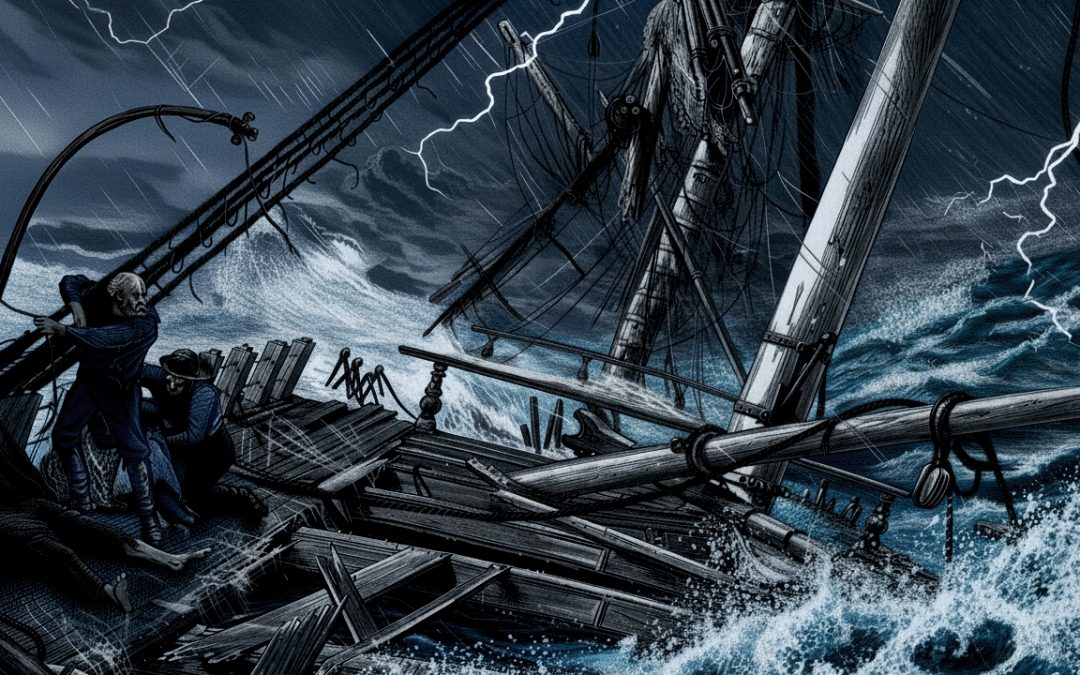
Note: the featured/lead image above is a colorized interpretation of an illustration called “Our Seamen, a Water-Logged Timer-Ship” from c. 1875. It was used, among other things, in the Jules Verne novel “The Survivors of the Chancellor.”
Also, I figure you know what OSHA is, but FYSA, MARAD is the United States Maritime Administration. They handle the U.S. Merchant Marine and maritime infrastructure and work a lot alongside the USCG Marine Inspection teams.
If you want to know a little more about oilskins, check out this article from the Nova Scotia Museum. It’s a fitting source since Ryan Houtekamer, who led our meeting with Forgeline Solutions, is an icy-hearted Canuckian Blue Noser from up in that neck of the woods.
[Insert pithy, circumlocutory closing statement here. DR]
Recent Comments